
High quality tools for innate immunity research and drug discovery
Option 1: Discover new anti-cancer agents
In this project, you will aim to screen our Phytotitre plant extract library to discover novel natural products capable of inhibiting the growth of cultured mammalian tumour cell-lines, such as HepG2 cells or PC3 cells. Positive hits from your project could be explored further to help develop new chemotherapy drugs to treat cancer.
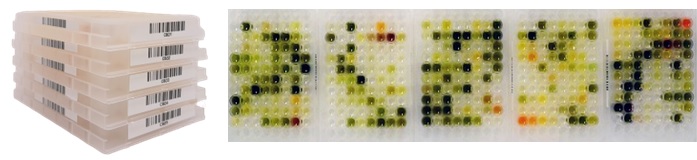
In this project you will explore whether any of the 400 extracts of traditional herbs and medicines contained within the Phytotitre library are capable of inhibiting the growth of one or more mammalian tumour cell-lines.
This will be done by culturing the cells in 96-well plates and treating them with each of the natural extracts in vitro. The effects on cellular growth and/or viability will then be measured using plate reader-based absorbance measurements.
You should discuss with your supervisor which mammalian cell-line would be most appropriate for you to investigate in your project. However, examples of cell-lines suitable for this type of assay include the MCF-7 (breast cancer) cell-line, PC3 (prostate cancer) and HepG2 (liver cancer) cell-lines.
Through this project, you will gain experience of many skills which are in much demand currently from employers. For example, you will practise standard tissue culture techniques, microplate screening assays, multichannel pipetting, cell viability assays and dose response analysis.
This project can be completed in 8-12 weeks of lab time. This timeframe can be extended or shortened by modifying the project on the advice of your supervisor.
To get started, simply read the project outline given below, then follow each of the method sheets in the order shown in the table to explore this particular research question.

Method Sheets for Project 01 - Discovery of new anti-cancer agents
How do I get started?
First, discuss with your supervisor whether this project will be suitable for your aims. If they agree, they will be able to place an order to purchase one of our Phytotitre kits on your behalf. As the order must come from your supervisor or the university purchasing team, you will not be able to place the order yourself.
What support is available to help me complete my project?
Our online project guides offer suggestions for suitable hypotheses to test, and research questions to address, during your project. A list of specific methods you should follow to complete each project variation is also given. Individual method sheets give step-by-step instructions on how to perform each experiment or stage of the analysis. Working through these method sheets in the order given in the project guide will help you to answer a specific research question. Please visit the individual project pages to see examples of how the guides and method sheets support individual projects. Day to day support will be from your university project supervisor.
How long does each project take?
This is very flexible and can be decided between you and your supervisor. The outlines we offer include many possible options for each project. A basic project can be completed in 8 weeks or less. Adding more experiments or analytical approaches can extend the project to 8 months or more.
Can I use the kits to study targets not listed in your methods or guides?
Certainly! The methods can be easily modified with help from your project supervisor to fit whichever target is most relevant to your shared interests.
Where can I find further technical information on the Phytititre library?
More detailed technical information on the library properties is available here.
Cam I buy larger quantities of individual extracts to further study them?
Yes, we can supply larger quantities of fresh extracts with a prompt turnaround. Please click here to view a current price list.
What are the advantages of focussing on natural products for drug discovery?
Natural products have historically been a highly successful source of new drugs (e.g. most antibiotics, many anti-cancer agents, statins, blood pressure drugs etc.). By focusing on plants with a history of oral use in man, the Phytotitre collection furthermore aims to maximise the chances of discovering drug leads which are both bioactive against a relevant target and of low toxicity.